Short essays from the studio on Stoicism, beauty, memory, and the discipline of doing one thing at a time. Select an essay to read it here.
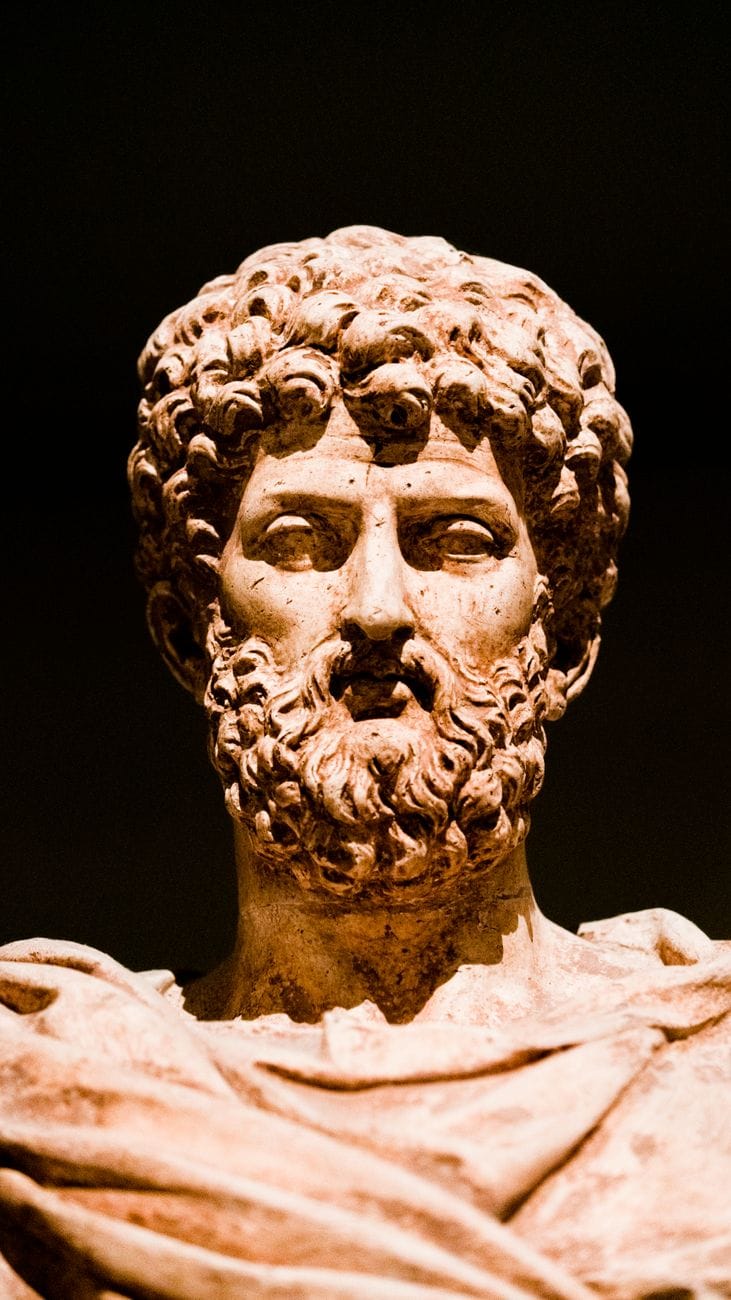
Two thousand years ago a Roman emperor kept a private notebook about how to live. The studio keeps one too, and publishes the pages worth keeping.
New essays arrive with the studio letter, first.
Most of what we own is temporary by design. An heirloom argues the other way.
Most of what we own is temporary by design. It arrives quickly, serves briefly, and leaves no trace except the vague feeling that something should have lasted longer.
An heirloom argues the other way. It is bought once, kept close, repaired rather than replaced, and handed on with a story attached. The Stoics kept their possessions few and their attachments deliberate. Not because things do not matter, but because the right things matter for a long time.
That is the standard we hold our objects to. A band worn until it carries the shape of the hand. A book read until the spine softens. If a piece cannot survive a life, it does not leave the studio.
"Confine thyself to the present," Marcus Aurelius wrote in the Meditations. A good object helps. It asks nothing of the future except to arrive there with you.
Gold holds its value because there is little of it. An hour of unbroken attention is rarer still.
Attention is the rarest material we work with. Gold holds its value because there is little of it. An hour of unbroken attention is rarer still, and it cannot be mined, only kept.
The objects in this studio are built around that hour. A candle that marks an evening. An hourglass that measures half of it honestly, without a notification in sight. Tools for the old practice of doing one thing at a time.
"No longer talk at all about the kind of man that a good man ought to be, but be such," Marcus Aurelius wrote to himself, two thousand years before the feed was invented. The advice has not aged.
Light the candle. Turn the glass. Begin.
The Greeks made memory a goddess and made her the mother of all the muses.
The Greeks made memory a goddess, Mnemosyne, and made her the mother of all the muses. Every art begins with remembering.
We build for memory in the literal sense. Objects that hold it: a pendant worn at the chest, a letter kept in a box worth keeping, a photograph that outlives its camera.
And we build for memory in the practiced sense. Evenings reviewed honestly. Days closed deliberately. The Stoic habit of asking, at the end of the day, what was done well and what is still owed.
A brand can sell you an object. Only a practice can make it mean something. We try to make both.
